

Looking, closely.
Interview with Lorenzo Morandi


I had hoped to do this interview many times.
I started following Lorenzo’s work when he began following mine, back in 2018 — if I remember correctly.
That mutual interest in each other’s projects led to many digital conversations over the years, until we finally met in person in 2023.
Through our many talks about photography, art, and design, I had the chance to learn a lot from him. His experience has had a strong influence on my own work — especially in how I approach a project from the ground up.
Lorenzo’s photography moves between personal exploration and a genuine interest in others. He has a remarkable ability to capture the true form and feeling of his subjects — all within a single still image.
His path crosses many disciplines, and you can clearly see the sharpness of his eye in the way he frames the world.
But I don’t want to give too much away.
Enjoy the interview.
Q. Hi Lorenzo, thank you for accepting this interview. It's a pleasure to host you: we have known each other for a long time, even if mainly virtually, and your approach to photography has always caught my attention. To begin with, would you like to introduce yourself to our readers?
A. Hi Cesare, thank you for the invitation and for your attention to my work. My name is Lorenzo Morandi, I was born in Modena in 1985, but I grew up in Alessandria, where I still live with my wife. We have two children and we both work in photography.
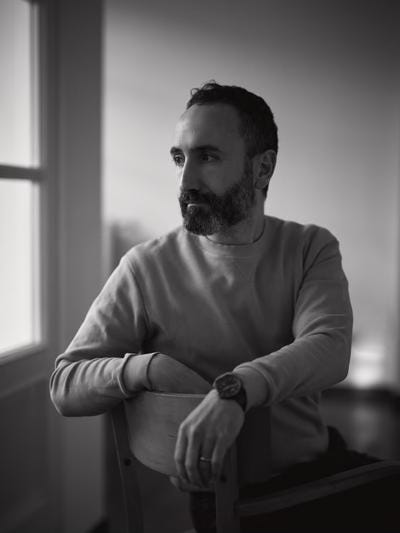
Q. Let's get right into details, as your path is full of interesting insights. Could you tell us how you ended up in photography? I know that, professionally, it was not your starting point.
A. During my university years, I often travelled to see the architecture I studied in books in person. Smartphone cameras at the time were very limited, so I started using my father's digital SLR. For a long time I almost exclusively photographed buildings, especially modern and contemporary ones.
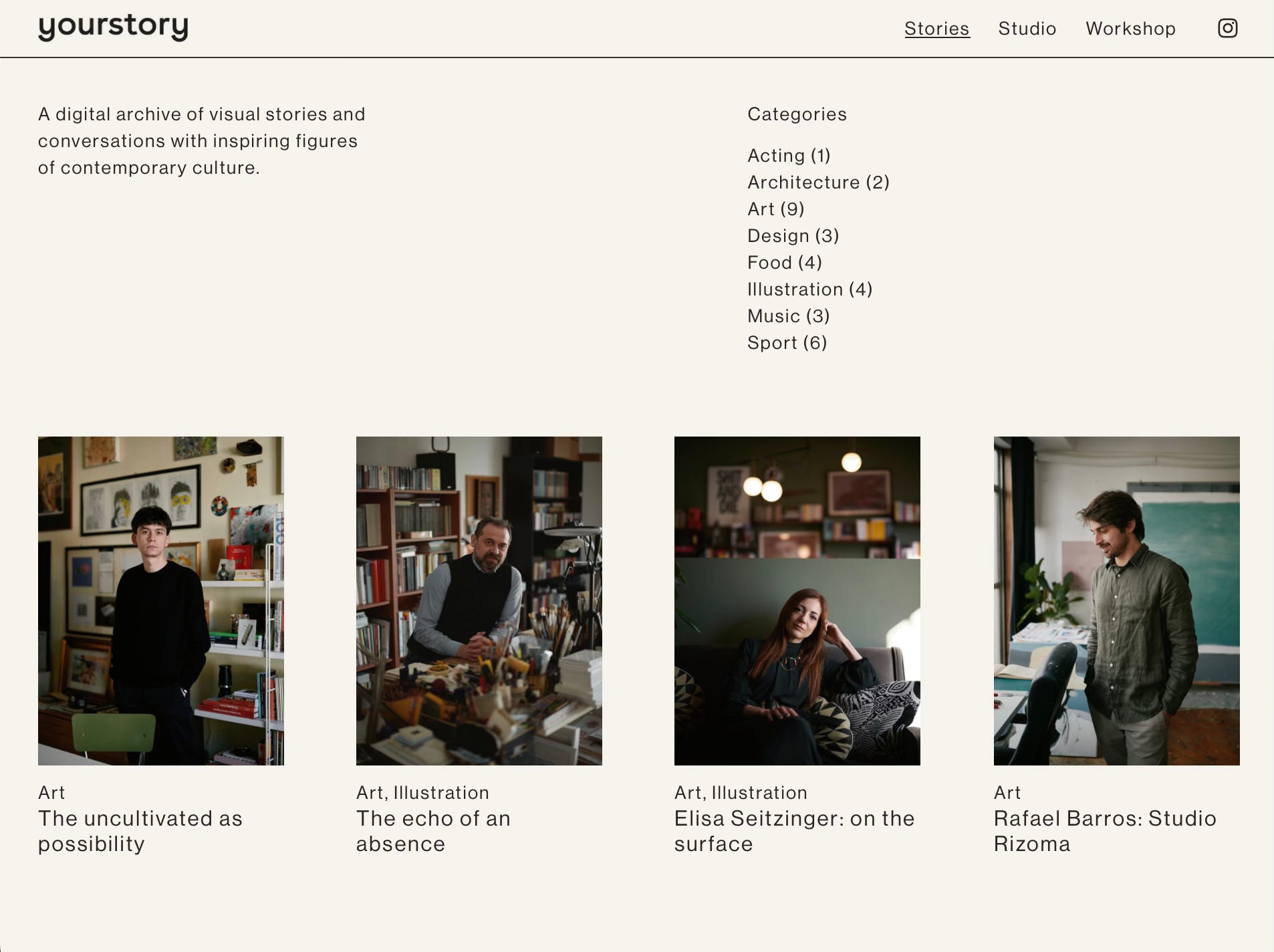
Q. Your visual and narrative sensibility led you to found YourStory, a project that also stemmed from a collaboration with your wife. How did you decide to set up such a complex initiative? What were the ideas and needs that guided you at the beginning?
A. YourStory was born almost ten years ago from an idea we shared with Sara: we wanted to collect and present some of our photographs as visual sequences. The subjects were people we met by chance on trips or in everyday life.
We chose a simple and direct name that would evoke the narrative power of the images and could evolve freely, as a project, magazine or studio.
YourStory represented a meeting point between our professional paths, which over time have taken different paths, becoming increasingly personal and recognisable.
Today it is a well-defined container within my research, which goes beyond photography and takes the form of a magazine in which images and words coexist in a coherent and recognisable format.
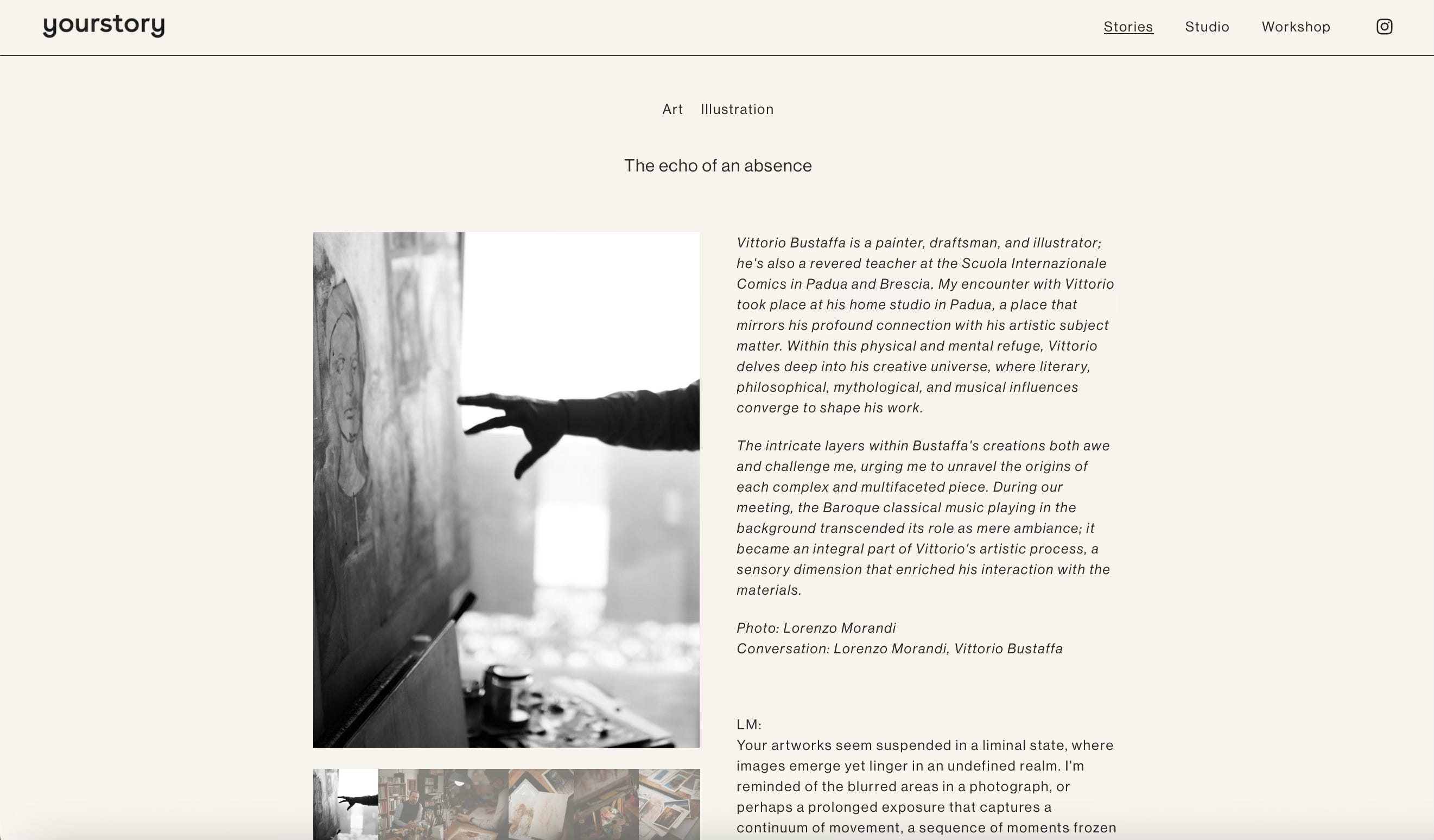
Q. YourStory conveys a strong sense of respect for the artists involved, both visually and narratively. I am particularly struck by the ability to bring out, with balance and strength, the connection between the person and their practice. Can you tell us more about the creative process behind each story? What tools or techniques do you use to build an effective narrative?
A. I always look for a visual coherence made up of geometric and chromatic resonances, alternating empty and full spaces, set portraits and close-ups, gestures and suspensions. This balance only arises when there is a real interest in the person I photograph: it is curiosity that guides me and opens up an intimate and authentic space.
Before each encounter I document myself, without wanting to frame who I have in front of me. Photographing, for me, is a gesture of listening and gathering inputs, which then come in handy when choosing the final sequence.
I prefer natural light, because it faithfully restores the atmosphere of the moment. I use few lenses to maintain consistency and to ensure that technique does not prevail over content. I generally work alone, in a direct dialogue with the subject.
Q. Over the past year, you have produced two editorial projects, one on the Castello Borelli in Borghetto Santo Spirito and one on Turin. Two different works from the usual, centred more on places rather than people. How much of your usual method did you apply in these projects? And what kind of new challenges did you face?
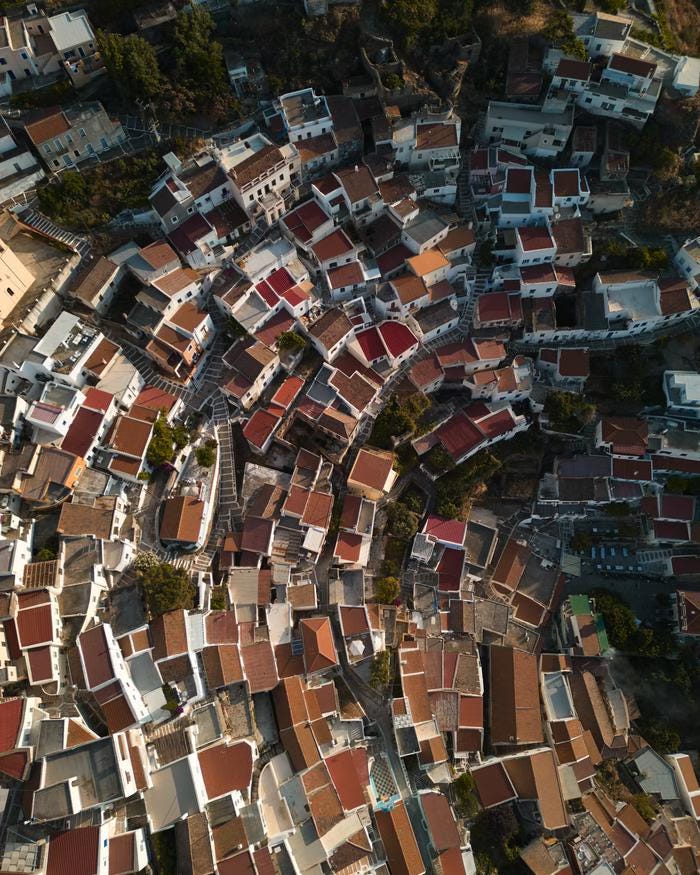
A. The first project is a book commissioned by the studio that supervised the architectural and urban intervention on Castello Borelli. I decided to narrate this long process through different points of view: not so much the people themselves, but the relationship between the human being and the built space, between architecture, nature and transformation.
The second book, dedicated to Turin, arose from a personal reflection on my connection with the city. I returned to the analytical approach with which I used to observe space and architecture in the past. But in such a complex work, editing was also fundamental, giving rhythm and coherence to the story.
In both cases, the challenge was to go beyond the single ‘beautiful image’, treating photography as a language capable of constructing meaning.
In the first project, I dealt with the dynamics of commissioned work, while in the second I discovered the world of publication and distribution, which was completely new to me. I learnt a lot thanks to the Swedish publisher NHaP, with whom a relationship of trust and continuous dialogue was established.


Q. Do you have any new publications in the pipeline? Maybe something more personal?
A. Yes, I am working on two new books, again with the same publisher. One will be dedicated to another Italian city, while the other will be deeply related to YourStory, with new photographic sequences telling about people and paths.
At the same time, I am pursuing a medium-term photographic project, started last year, which I would like to turn into a book. But it will still take time and the right conditions.
Q. How do you imagine YourStory in five years time? Are there new horizons you would like to explore?
A. YourStory will be more and more a subset of my work, a project that will probably find a form of completion with the publication of the book of the same name and perhaps one day be supported by other contributors and authors. I am very interested in its potential to create a collaborative network and a place for interdisciplinary stimulation and insights. But at the same time my research is shifting to different and more personal topics.
Q. Yours is a constantly evolving project, and you have also recently started workshops. So, looking at your whole path, what kind of advice or encouragement would you feel like giving to someone approaching photography today?
A. My path has not been linear: I come from different studies and worked for years in the field of architecture, which gave me a lot but also absorbed a lot of energy. It is precisely the sum of these experiences that has made my photographic gaze recognisable.
I think everyone goes through times when they need confirmation or encouragement. My advice is not to look for universal answers, but to be ready to question yourself, to make mistakes, to change your way. Having a point of reference, even outside of photography, is valuable, as long as you keep a critical spirit.
Today, photography is experiencing an unprecedented digital acceleration. It is increasingly easy to obtain technically valid results, but this makes it even more important to question the meaning of images. There are no exact answers but only intelligent, or perhaps necessary, questions from which to start, even before thinking about the form of the answers.
Support Lorenzo’s work by sharing and following.
 | Un post ospite di
|